
1. The Evolution of Fast-Track Construction in Dubai Retail Hubs
Dubai’s Retail Landscape
Dubai has become a global benchmark for modern retail, attracting international brands, luxury retailers, and lifestyle centers.
The city’s retail hubs are not only commercial centers but also iconic architectural destinations that blend shopping, leisure, and entertainment.
From the Dubai Mall to Mall of the Emirates, these retail spaces are designed to impress while accommodating high footfall and diverse tenant requirements. However, the accelerated pace of urban development in Dubai has created pressure on developers to deliver retail projects faster than ever before.
Traditional construction techniques, particularly those based on conventional reinforced concrete, often fail to meet these tight timelines, leading to increased costs, delayed openings, and missed market opportunities. This growing demand for speed, efficiency, and flexibility has fueled the rise of fast-track construction methods in the region.
What Is Fast-Track Construction?
Fast-track construction is an innovative approach where design, planning, and construction phases overlap instead of following a linear sequence. Conventional construction typically requires full design completion before site work begins, which can be time-consuming and inflexible.
In fast-track projects, portions of the design are finalized early, allowing site mobilization and construction to commence simultaneously with ongoing design development. This method is particularly advantageous for large-scale retail projects, where every week of delay can result in significant financial losses.
Fast-track construction enables developers to bring projects to market sooner, maximizing revenue potential and improving competitiveness in a rapidly evolving retail environment like Dubai.
Steel Structures: The Backbone of Fast-Track Retail Construction
Steel has emerged as a key enabler of fast-track construction in Dubai. Its inherent properties high strength-to-weight ratio, durability, and prefabrication capability—make it ideal for large-scale commercial structures.
Unlike concrete, steel allows for long column-free spans, which are essential for creating flexible retail interiors capable of accommodating varied tenant layouts, wide aisles, and expansive atriums. Prefabrication in controlled factory environments ensures precision, high quality, and faster assembly on-site.
By reducing dependence on large labor crews and extensive formwork, steel construction accelerates project timelines while maintaining structural integrity. For Dubai’s retail developers, these advantages translate directly into faster market entry, reduced risk of schedule overruns, and enhanced operational flexibility.
Labor Efficiency and Site Management
One of the major constraints in traditional construction is labor-intensive processes such as formwork, concrete pouring, curing, and finishing. Delays in one phase often cascade, impacting subsequent activities and overall project completion.
Steel construction mitigates these challenges by enabling prefabrication and modular assembly. Components manufactured off-site can be delivered and installed quickly, minimizing on-site labor requirements and reducing exposure to weather-related delays.
In a city like Dubai, where construction sites face extreme heat, dust, and limited space, these efficiencies are critical. Steel’s lighter weight also simplifies transportation and handling, further streamlining site logistics and scheduling.
Adaptability to Climate and Environmental Challenges
Dubai’s desert climate, characterized by extreme heat and occasional sandstorms, poses unique challenges to conventional construction methods.
Concrete curing is sensitive to temperature, requiring additional precautions such as cooling agents, shade, or delayed pours, which can slow down project timelines. Steel, however, is largely unaffected by heat during construction, allowing for continuous progress even under harsh environmental conditions.
Additionally, steel structures impose lower loads on foundations due to their lighter weight, enabling faster foundation design and construction. This adaptability makes steel an ideal solution for high-demand urban retail districts where weather-related interruptions must be minimized to maintain schedule integrity.
Flexibility in Retail Space Design
Retail environments are dynamic, with tenant requirements and consumer expectations evolving constantly. Steel structures offer significant flexibility to accommodate these changes.
Long-span beams and column-free designs allow interior layouts to be reconfigured easily, supporting modifications such as adding mezzanines, adjusting floor plates, or altering circulation paths without major structural changes. This adaptability ensures that retail hubs remain functional, attractive, and competitive over their lifecycle.
Unlike concrete, where structural modifications often involve significant demolition and reconstruction, steel allows developers and architects to respond to market trends efficiently, keeping spaces relevant and versatile.
Economic Advantages
Fast-track construction with steel not only accelerates project timelines but also delivers tangible economic benefits. Reduced construction duration translates directly into earlier openings, faster revenue generation, and improved return on investment.
Shorter project timelines also reduce financing costs and exposure to market fluctuations. Steel’s prefabrication reduces on-site waste and the need for rework, leading to lower labor costs and fewer material overruns.
For retail developers in Dubai, these financial efficiencies are critical, given the high stakes associated with prime commercial real estate and the competitive nature of the market.
Compliance, Safety, and Quality Assurance
Dubai enforces stringent building codes covering structural safety, fire resistance, seismic performance, and material quality.
Steel construction, supported by advanced modeling and fabrication technology, meets these requirements while offering precision and reliability. Prefabrication reduces the likelihood of on-site errors, ensuring consistent quality and compliance with regulations.
Furthermore, steel’s predictable behavior under load enhances structural safety, a crucial consideration for public retail spaces hosting thousands of visitors daily. These factors combine to reduce inspection failures, rework, and schedule disruptions, reinforcing the suitability of steel for fast-track retail projects.
Sustainability Considerations
Modern retail projects increasingly prioritize sustainability alongside speed and efficiency. Steel is highly recyclable and produces less on-site waste compared to concrete.
Reduced construction activity, fewer deliveries, and shorter timelines also minimize environmental impact, including dust, noise, and energy consumption. In urban districts where environmental disruption must be managed carefully, these benefits are significant.
Furthermore, steel structures support green building certifications by enabling energy-efficient designs, integration of renewable systems, and reduced carbon footprint. By combining speed, flexibility, and environmental responsibility, steel aligns with Dubai’s vision of sustainable urban development.
2. Advantages of Steel Structures in Retail Construction
Speed of Construction
One of the most compelling advantages of steel in retail construction is the remarkable speed it allows during the building process.
Unlike traditional reinforced concrete, which requires time-intensive activities such as formwork, curing, and scaffolding, steel components are typically prefabricated off-site in controlled environments.
This prefabrication process ensures that all structural elements beams, columns, trusses, and panels are manufactured to exact specifications, reducing the likelihood of on-site errors or adjustments. Once delivered to the construction site, these components can be quickly assembled, often using cranes and modular connections, significantly shortening the construction schedule.
In Dubai, where retail developers face tight deadlines to capitalize on commercial opportunities, this acceleration can mean the difference between capturing peak market demand and missing a season entirely.
Projects that once required eighteen months with conventional construction can now be completed in twelve months or less, without compromising structural integrity.
\Precision and Quality Control
Steel construction offers superior precision compared to traditional methods. In the factory-controlled environment where steel components are prefabricated, stringent quality control measures are enforced.
Computer-aided design (CAD) and computer numerical control (CNC) fabrication ensure that dimensions, tolerances, and connection points are accurate to millimeter-level specifications. This precision reduces the need for on-site adjustments, which are common in concrete construction due to variations in casting, curing shrinkage, or environmental conditions.
Furthermore, high-quality welding, bolting, and coating processes protect steel against corrosion, ensuring long-term durability.
For high-profile retail hubs in Dubai, maintaining consistent quality is critical, as these buildings are not only commercial assets but also architectural landmarks that represent global brands and the city’s image.
Structural Flexibility
Retail spaces require adaptability to accommodate diverse tenants, fluctuating occupancy levels, and evolving interior designs. Steel structures excel in providing long-span, column-free spaces that can be reconfigured without significant structural modification.
For example, a large retail floor initially designed for a department store can later be subdivided into smaller boutique outlets, restaurants, or entertainment zones with minimal disruption.
In contrast, reinforced concrete buildings typically have fixed column grids, which limit flexibility and often necessitate costly demolition and reconstruction for interior modifications.
The inherent strength-to-weight ratio of steel allows architects and engineers to design expansive open areas, high ceilings, and mezzanines, enhancing the retail experience while maintaining structural safety.
This flexibility ensures that Dubai’s retail hubs can remain competitive and adaptable to shifting consumer behaviors.
Reduced On-Site Labor Requirements
Labor availability and costs are significant challenges in large-scale retail construction. Steel construction reduces dependence on extensive on-site labor because most assembly work involves bolting or welding prefabricated components rather than traditional labor-intensive tasks like concrete casting or masonry.
This efficiency not only accelerates the project timeline but also reduces labor-related risks, including safety incidents, fatigue, or coordination errors. In Dubai’s desert environment, where extreme heat can limit work hours and reduce productivity, minimizing on-site labor is particularly advantageous.
By relying on prefabricated steel modules, developers can maintain consistent progress, even under challenging environmental conditions, while also improving safety and reducing operational overhead.
Durability and Longevity
Steel structures are renowned for their durability and resilience, especially when designed and treated appropriately for local environmental conditions. Dubai’s coastal climate can be harsh, with high humidity, salt-laden air, and intense sunlight, all of which can accelerate material degradation.
Steel components are typically treated with anti-corrosion coatings, galvanization, or specialized paints to resist rust and deterioration. Unlike concrete, which may develop cracks over time due to shrinkage, thermal expansion, or seismic activity, steel maintains its structural integrity with minimal maintenance.
This durability ensures that retail hubs remain safe, functional, and visually appealing for decades, providing long-term value to developers and tenants.
Adaptation to Architectural Innovation
Dubai’s retail projects are often iconic, combining engineering excellence with striking architectural design. Steel enables architects to explore ambitious forms such as cantilevered roofs, expansive atriums, curved facades, and floating mezzanines, which are difficult or cost-prohibitive with conventional concrete construction.
Its strength-to-weight ratio allows for daring structural concepts, giving architects the freedom to create unique shopping environments that enhance the customer experience.
For example, a steel-framed atrium can support large glass panels and open spaces without compromising safety, while complex roof geometries can be achieved without excessive material or labor costs.
By supporting creative and innovative design, steel structures reinforce Dubai’s reputation for world-class retail architecture.
Integration with Mechanical and Electrical Systems
Modern retail hubs require sophisticated mechanical, electrical, and plumbing (MEP) systems to support lighting, HVAC, fire protection, and smart building technologies. Steel structures facilitate integration of these systems by providing flexible pathways, raised flooring, and accessible service zones.
Prefabricated steel components can be designed with openings, brackets, or conduits for utilities, reducing the need for retrofitting and minimizing disruption during construction.
This pre-planning capability ensures that all systems are installed efficiently and coordinated with the structural framework, leading to fewer conflicts, reduced installation time, and smoother commissioning.
In fast-track retail projects, where overlapping activities are common, steel’s adaptability enhances coordination between structural, architectural, and MEP teams, contributing to overall project efficiency.
Cost Efficiency in Fast-Track Projects
While steel may have a higher material cost compared to concrete, the overall project economics often favor steel in fast-track retail construction.
The accelerated timeline reduces financing costs, allows earlier tenant occupancy, and minimizes penalties associated with delays.
Prefabrication reduces on-site waste, labor hours, and rework costs, which often exceed the material cost difference. Additionally, steel’s lightweight nature can reduce foundation requirements, particularly in areas with complex soil conditions or high water tables, further optimizing costs.
For developers in Dubai, where prime retail real estate carries significant investment stakes, the cost advantages of steel when combined with speed, quality, and flexibility translate into higher returns on investment and lower risk exposure.
Sustainability Benefits
Sustainability is an increasingly important factor in Dubai’s construction industry.
Steel is one of the most recyclable materials in construction, and modern fabrication processes minimize waste.
Prefabrication reduces the carbon footprint of on-site construction by decreasing energy use, transportation requirements, and construction-related emissions.
Moreover, steel’s durability reduces long-term maintenance needs and extends the life cycle of the building.
Retail developers can also incorporate green technologies, such as solar panels, efficient lighting, and smart building management systems, seamlessly into steel-framed structures.
The combination of reduced waste, recyclable materials, and compatibility with sustainable systems positions steel as a responsible choice for environmentally conscious retail projects.
Safety Advantages
Safety is paramount in high-traffic retail environments. Steel’s predictable structural behavior under load, resistance to cracking, and capacity to withstand seismic and wind forces make it a reliable choice for public spaces.
Prefabrication reduces on-site construction hazards associated with formwork, concrete pouring, and heavy material handling.
Modular assembly also allows for more controlled working conditions, limiting exposure to unsafe situations such as working at height or handling wet concrete.
Furthermore, steel’s fire resistance can be enhanced through coatings or encasement, providing additional protection for both occupants and structural integrity.
By combining structural reliability with safer construction practices, steel structures reduce liability risks for developers and provide secure, long-lasting retail environments.
3. Design Considerations for Steel Retail Structures
Structural Load Planning
One of the most critical aspects of designing steel retail structures is accurate structural load planning. Unlike smaller residential buildings, retail hubs must support substantial live loads due to high occupant density, merchandise weight, and dynamic activities such as foot traffic and equipment handling.
Steel’s high strength-to-weight ratio allows engineers to efficiently calculate load distribution across beams, columns, and trusses. In fast-track construction, detailed load analysis is essential for prefabrication accuracy; any miscalculation can result in misaligned connections or structural compromises.
Engineers often employ advanced software tools for finite element analysis (FEA) and 3D modeling to simulate load behavior under various scenarios, ensuring that the framework can safely accommodate both expected and unforeseen stresses.
This planning extends to roof loads, mechanical installations, and temporary construction loads, which must be considered to prevent deflection or failure during assembly.
Column-Free Interior Spaces
Retail environments thrive on open, flexible interiors. Steel construction facilitates expansive, column-free areas that allow uninterrupted floor layouts and optimize visual merchandising.
By using long-span steel beams, trusses, and moment-resisting frames, architects can design flexible layouts that adapt to changing tenant requirements or promotional strategies.
These long spans reduce the need for internal columns, which can obstruct sightlines and complicate interior design. Additionally, column-free spaces simplify circulation, improve accessibility, and enhance customer experience.
Achieving such spans with concrete would require significantly deeper beams, thicker slabs, and stronger foundations, which increase material use, construction time, and costs.
Steel’s ability to achieve long spans efficiently makes it ideal for Dubai’s fast-paced retail sector, where open and versatile spaces are key to both functional and aesthetic success.
Integration of Facades and Cladding
Modern retail architecture often features dramatic glass facades, curtain walls, and metal cladding. Steel frameworks provide the necessary structural support for these architectural elements without compromising speed or safety.
The design phase includes coordination with facade engineers to ensure that panels, glazing, and decorative elements are properly anchored to the steel frame.
Prefabricated steel connections can accommodate adjustable brackets or attachment points, simplifying on-site installation of heavy or complex cladding systems.
Additionally, steel allows for cantilevered elements, overhangs, and curved profiles that contribute to the building’s iconic aesthetic while maintaining structural integrity.
In Dubai, where visual impact is as critical as functionality, the integration of steel frames and advanced facade systems ensures both architectural ambition and engineering reliability.
Foundations and Soil Considerations
Even though steel structures are lighter than reinforced concrete, foundation design remains critical. Retail hubs often sit on reclaimed land or sites with variable soil conditions, particularly in urban areas of Dubai.
Engineers must consider soil bearing capacity, potential settlement, and differential movement to ensure long-term stability.
The reduced weight of steel allows for shallower foundations compared to concrete, accelerating excavation and reducing material costs.
However, careful geotechnical analysis is still required to account for dynamic loads, wind uplift, and seismic considerations.
The foundation design must integrate seamlessly with steel columns and base plates, using anchor bolts and reinforced footings to secure the superstructure.
Proper foundation planning ensures that the fast-track assembly of steel components proceeds without delays or rework, contributing to overall project efficiency.
Seismic and Wind Load Resistance
Dubai’s building codes mandate that commercial structures withstand both seismic events and wind loads.
Steel is particularly advantageous in this context because of its ductility and ability to dissipate energy under dynamic forces.
During design, engineers calculate lateral load effects, torsion, and bending moments, incorporating bracing systems, moment-resisting frames, and shear walls as needed.
The lightweight nature of steel reduces the mass of the structure, thereby reducing inertial forces during seismic events.
Wind tunnel testing or computational fluid dynamics (CFD) simulations are often conducted for high-profile retail hubs to ensure that cantilevered roofs, open atriums, and facade projections remain stable under extreme wind conditions.
These analyses inform the selection of cross-sections, connections, and bracing strategies, ensuring safety while maintaining design flexibility and aesthetic appeal.
Fire Safety and Material Protection
Fire safety is a key consideration in retail construction, given the high occupancy and commercial value of assets.
Steel, while non-combustible, loses strength at elevated temperatures and requires protection through coatings, encasements, or sprinklers. Intumescent paints, concrete encasements, and fire-resistant boards are commonly integrated into the design to maintain structural integrity during a fire.
In fast-track projects, coordination between structural, architectural, and fire engineers is critical to ensure that protective measures do not delay assembly or clash with other systems.
Additionally, fire safety planning includes compartmentalization, exit routes, and emergency signage, all of which must be compatible with steel frameworks.
These considerations ensure that the building not only complies with Dubai’s fire codes but also protects occupants, merchandise, and structural components from catastrophic failure.
MEP Integration
Mechanical, electrical, and plumbing (MEP) systems are essential for modern retail hubs, and steel design must accommodate these components.
Steel beams can include pre-drilled openings, attachment brackets, and routing pathways for HVAC ducts, electrical conduits, and water piping.
Prefabrication allows these integration points to be planned in advance, minimizing clashes between trades during installation.
Efficient integration of MEP systems not only accelerates construction but also ensures ongoing accessibility for maintenance and upgrades. In retail environments, where multiple tenants may operate independently, steel structures provide the adaptability to reroute or extend services without major structural modifications.
This coordination is particularly valuable in Dubai, where fast-track construction demands concurrent installation of structural and building systems.
Sustainability and Energy Efficiency
Sustainable design is increasingly a priority in Dubai’s commercial sector. Steel structures contribute to sustainability in multiple ways: they are highly recyclable, produce minimal on-site waste, and can incorporate energy-efficient design elements.
The open floor layouts and column-free spaces facilitated by steel allow for natural daylighting, improving energy efficiency and occupant comfort.
Additionally, prefabrication reduces emissions from on-site construction and transportation. Structural design can also support solar panels, green roofs, and other energy-saving technologies, further enhancing the environmental performance of retail hubs.
By combining structural efficiency with sustainable practices, steel construction meets both commercial objectives and regulatory requirements for environmentally responsible development.
Modularity and Expansion Potential
Steel structures provide a modular approach to retail construction that supports future expansion.
As market demand evolves, additional floors, mezzanines, or adjacent structures can be integrated with minimal disruption. The design phase often includes provisions for future load-bearing points, connection nodes, and service extensions.
This forward-thinking approach ensures that Dubai’s retail hubs remain flexible and economically viable over time, allowing developers to respond to changing market conditions without extensive demolition or rebuilding.
The modular nature of steel construction is particularly advantageous in fast-track projects, as it allows phased construction and partial occupancy without compromising safety or functionality.
Cost-Benefit Analysis
From a financial perspective, the design considerations of steel retail structures contribute to both short-term and long-term savings.
While steel material costs may initially exceed those of concrete, the reduced labor requirements, accelerated schedule, minimized rework, and lower foundation costs result in an overall competitive project budget.
Moreover, the flexibility, durability, and adaptability of steel structures protect investment over time by reducing maintenance, renovations, and downtime for tenants.
Developers in Dubai recognize that these advantages not only enhance profitability but also improve tenant satisfaction and retention, which are critical for long-term commercial success.
4. Prefabrication and Modular Assembly in Steel Retail Hubs
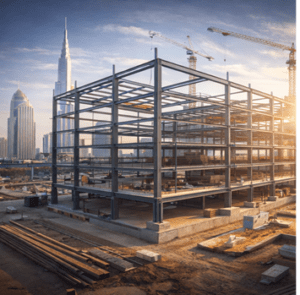
Prefabrication is at the core of fast-track construction for retail hubs in Dubai. Unlike traditional on-site construction, prefabrication involves the assembly of structural components in a controlled factory environment before being transported to the construction site.
This approach enhances quality control, reduces on-site labor requirements, and minimizes weather-related delays. Steel components, such as beams, columns, trusses, and wall panels, are particularly well-suited for prefabrication due to their dimensional precision, uniformity, and high strength.
Detailed planning is required at the design stage to ensure that prefabricated elements fit seamlessly on-site, accounting for connections, tolerances, and load requirements.
For retail hubs with complex architectural designs, prefabrication allows engineers to simulate assembly in a virtual environment, identifying potential conflicts and optimizing sequences before any physical work begins.
Factory-Driven Quality Control
One of the major advantages of prefabrication is enhanced quality control. Steel elements fabricated in a factory are subject to rigorous inspection standards, including dimensional checks, weld integrity, and surface treatment.
Controlled conditions ensure consistency across batches, reducing the risk of defects that may compromise structural performance.
For Dubai retail projects, where timelines are tight and commercial expectations high, this predictability is essential.
Each prefabricated unit is labeled and documented for traceability, making it easier for on-site teams to coordinate installation. This level of quality assurance not only ensures structural reliability but also contributes to a smoother permitting and inspection process with local authorities.
Transportation and Logistics Planning
Efficient logistics are critical for the success of prefabricated steel construction. Large beams, trusses, and modular panels must be transported from fabrication facilities to the construction site without damage or delay.
Engineers and project managers must plan for route clearance, crane placement, and staging areas to ensure safe handling. In Dubai, traffic constraints and urban density require meticulous coordination to deliver materials just-in-time, minimizing storage needs and site congestion.
Prefabricated modules are often designed with transportation in mind, including optimized dimensions and connection points that facilitate crane placement and assembly.
Effective logistics management reduces project risks, accelerates schedules, and ensures that site operations remain efficient throughout the fast-track construction process.
Modular Assembly Techniques
Steel structures lend themselves exceptionally well to modular assembly. Components such as floor decks, roof trusses, and wall panels are pre-assembled into modules that can be lifted and positioned rapidly on-site.
This modular approach allows parallel construction activities: while foundations and core utilities are being installed, modules can be prepared off-site, reducing overall project duration.
On-site assembly involves bolting or welding modules together, often using high-capacity cranes to place large sections in a single lift. This reduces repetitive on-site labor, enhances safety, and ensures that construction timelines align with retail tenant expectations.
Modular assembly also allows for early enclosure of the building, enabling interior work such as MEP installation and finishes to proceed while the structural shell is completed.
Connection Design and Tolerances
The success of prefabrication and modular assembly depends heavily on precise connection design.
Steel members are joined using bolts, welds, or hybrid techniques, each with specific tolerances and load capacities. In fast-track retail projects, these connections must allow for rapid assembly without compromising safety or structural integrity.
Engineers carefully design connection points to accommodate slight variations in alignment, temperature expansion, and fabrication tolerances.
Pre-installed templates, embedded plates, and self-aligning features are often incorporated to accelerate installation. Proper attention to connection design ensures that modules fit together seamlessly, preventing delays and costly on-site modifications.
Time Savings and Schedule Acceleration
Prefabrication and modular assembly provide significant time savings, which is critical in Dubai’s competitive retail market.
Traditional steel construction may involve sequential activities, such as pouring concrete floors, waiting for curing, and then erecting beams and columns. Prefabrication allows multiple processes to occur simultaneously: while foundations are being completed, modules are being fabricated and quality-checked off-site.
This parallel workflow dramatically shortens the construction schedule. Fast-track timelines allow retail developers to meet aggressive opening dates, capitalize on seasonal market opportunities, and reduce financing costs. Time savings also reduce exposure to labor shortages, weather delays, and logistical bottlenecks, enhancing project predictability.
Safety Enhancements
Prefabrication improves safety by shifting high-risk activities from the construction site to the controlled factory environment. Tasks such as welding, heavy lifting, and dimensional verification occur in a safer setting with specialized equipment, reducing the likelihood of accidents.
On-site, the assembly process focuses on positioning and connecting modules, which is faster and less hazardous than fabricating components at height or in confined spaces.
Additionally, steel modules are often lighter than equivalent concrete structures, reducing crane loads and minimizing risks associated with lifting and handling. Enhanced safety measures not only protect workers but also contribute to uninterrupted progress on fast-track retail projects.
Flexibility for Architectural Innovation
Steel prefabrication does not limit architectural creativity; in fact, it supports complex forms, cantilevered structures, and curved facades commonly seen in Dubai retail hubs. Prefabricated steel elements can be engineered to accommodate unconventional shapes, long spans, and cantilevered roof or floor features.
Modular assembly enables architects to achieve visual impact without compromising structural integrity or construction speed.
Prefabrication also allows for the integration of glass facades, curtain walls, and decorative cladding panels directly onto modules, streamlining installation and reducing coordination issues between trades.
This flexibility is particularly valuable in high-profile retail projects where design differentiation is a key competitive advantage.
Sustainability Benefits
Prefabrication contributes to sustainable construction by minimizing waste, reducing energy consumption, and optimizing material use.
Factory-controlled cutting, welding, and finishing reduce scrap steel, while off-site assembly limits on-site disturbance, dust, and noise. Efficient logistics reduce fuel consumption during transportation, and precise modular assembly reduces the need for temporary formwork or scaffolding.
Additionally, steel is highly recyclable, making it an environmentally responsible choice for retail developers seeking LEED certification or Dubai Municipality sustainability compliance.
By combining speed, precision, and environmental stewardship, prefabricated steel structures align with both commercial and ecological objectives.
Future Expansion and Adaptability
Prefabricated and modular steel construction allows retail hubs to be expanded or modified with minimal disruption. Modules can be added, removed, or reconfigured as tenant needs evolve, without extensive demolition or rebuilding.
Structural provisions for future expansion, such as embedded connection points or reinforced columns, are incorporated during the design phase. This adaptability ensures that retail hubs remain economically viable and operationally flexible over time.
For developers in Dubai, where market demands fluctuate rapidly, the ability to adjust building layouts quickly is a critical competitive advantage.
Cost Efficiency
While prefabrication may involve higher initial costs for factory production, the overall cost efficiency is significant.
Reduced labor requirements, faster schedules, fewer on-site errors, and minimized material waste contribute to lower total project costs.
Fast-track completion allows developers to generate revenue sooner, reducing financing and holding costs.
The durability and precision of steel modules also reduce long-term maintenance and modification expenses.
In competitive retail markets, cost efficiency combined with speed and quality enhances return on investment, making prefabricated steel structures a compelling solution for Dubai’s fast-paced commercial construction sector.
5. Innovations in Steel Design for Retail Hub Efficiency
Lightweight Yet High-Strength Solutions
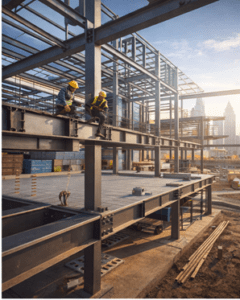
One of the key innovations in steel design for retail hubs is the development of lightweight yet high-strength structural elements. Modern steel alloys and fabrication techniques allow designers to reduce member sizes without compromising load-bearing capacity.
This has a direct impact on fast-track construction, as lighter components are easier to transport, handle, and install on-site. For Dubai retail hubs, where large spans and open interiors are often desired for aesthetic and functional purposes, high-strength steel beams and trusses can achieve long spans with minimal support.
This reduces the number of columns, creates flexible retail spaces, and accelerates the modular assembly process. The combination of strength, durability, and reduced weight optimizes construction schedules while maintaining structural safety and stability.
Long-Span Trusses and Cantilevered Roofs
Retail hubs increasingly rely on long-span trusses and cantilevered roofs to create column-free interiors and expansive atriums.
Steel’s exceptional tensile and compressive properties make it ideal for such applications. Advanced engineering software allows precise modeling of truss geometries, load distributions, and connection forces, ensuring that structural performance aligns with architectural intent. Cantilevered roofs, in particular, require careful balancing of loads to prevent deflection or instability.
Prefabricated truss modules can be pre-assembled in the factory and lifted into place, significantly reducing on-site erection time.
In addition, long-span steel solutions allow the integration of skylights, glass panels, and other design elements, creating visually striking retail spaces while maintaining fast-track delivery timelines.
Hybrid Steel-Concrete Systems
Another innovation driving efficiency in retail hub construction is the use of hybrid steel-concrete systems.
Composite floors, for example, combine steel beams with concrete slabs, leveraging the strengths of both materials. Steel provides tensile resistance and rapid assembly, while concrete contributes compressive strength, acoustic insulation, and fire resistance.
In fast-track construction, hybrid systems are advantageous because steel beams can be installed quickly, followed by lightweight concrete or precast slabs, enabling parallel interior work.
These systems also improve thermal and acoustic performance, which is increasingly important in Dubai’s mixed-use retail environments.
The integration of steel and concrete allows architects and engineers to optimize structural performance, minimize material usage, and accelerate construction schedules.
Parametric Design for Speed
Parametric design is a growing trend in steel retail construction, enabling engineers and architects to optimize structural forms and modular layouts efficiently.
This tools allow for automatic adjustments of member sizes, connection points, and truss geometries based on load requirements, material availability, and fabrication constraints.
For fast-track projects, this means that design iterations can be completed rapidly, reducing delays caused by manual recalculations. In addition, parametric models can generate detailed shop drawings, connection templates, and assembly instructions directly from the digital model, streamlining fabrication and installation processes.
The ability to adapt designs dynamically ensures that retail hubs maintain flexibility, meet client specifications, and achieve accelerated delivery timelines.
Advanced Connection Systems
Steel innovations also extend to connection design, which is critical in fast-track retail construction.
Modern connection systems include pre-engineered bolted connections, self-aligning plates, and hybrid weld-bolt solutions. These connections reduce on-site assembly time and allow for rapid erection of prefabricated modules.
For cantilevered and long-span elements, connection design ensures that loads are transferred efficiently while maintaining flexibility for minor adjustments during installation.
Innovations such as modular joint kits, adjustable base plates, and embedded anchor templates simplify alignment and reduce human error.
These systems are particularly valuable in Dubai’s large retail hubs, where precise alignment is essential to maintain both structural integrity and architectural aesthetics.
Integration of MEP and Services
Efficiency in steel design extends beyond the structure itself to the integration of mechanical, electrical, and plumbing (MEP) systems.
Modern steel layouts are engineered to accommodate service penetrations, cable trays, ducts, and piping without compromising load-bearing capacity. Prefabricated steel modules often include embedded conduits or pre-cut openings to facilitate rapid installation of services.
This reduces conflicts between trades, minimizes on-site adjustments, and accelerates overall project timelines.
For fast-track retail hubs, seamless coordination between structural and service elements is essential to achieve simultaneous progress in multiple work streams, enabling earlier enclosure and fit-out activities.
Durability and Lifecycle Performance
Innovative steel solutions focus not only on construction speed but also on long-term performance. Dubai’s retail hubs face high temperature variations, humidity, and occasional exposure to saline air in coastal areas.
Modern steel alloys, protective coatings, and galvanization techniques enhance corrosion resistance, ensuring structural durability over decades. This reduces maintenance requirements, minimizes lifecycle costs, and provides retail developers with confidence in building performance.
Additionally, steel structures are inherently adaptable, allowing future modifications, expansions, or tenant-specific adjustments without extensive demolition.
By emphasizing both durability and adaptability, steel design innovations support sustainable fast-track construction strategies while safeguarding long-term value.
Seismic and Wind Load Optimization
Although Dubai is not a high-seismic region, retail hubs still require careful consideration of dynamic loads, particularly wind effects on large atriums, cantilevered roofs, and expansive glass facades.
Advanced steel design incorporates aerodynamic shaping, bracing systems, and optimized member sizing to resist wind-induced vibrations and deflections. Computational fluid dynamics (CFD) simulations, finite element analysis (FEA), and load path modeling allow engineers to fine-tune steel layouts for maximum stability and minimal material use.
Efficient wind and load optimization reduce the need for excessive reinforcement, enabling faster assembly and cost savings. By addressing dynamic forces upfront, steel retail hubs achieve both safety and speed in construction, crucial for fast-track projects.
Fire Resistance and Safety Innovations
Fire safety remains a critical consideration in retail hub design. Innovative steel solutions include intumescent coatings, fireproof cladding, and composite floor systems that enhance fire resistance without adding significant weight.
Prefabricated steel modules can be treated off-site, ensuring compliance with Dubai Civil Defense regulations while reducing on-site labor. Fire-resistant designs also maintain structural integrity under high temperatures, preventing catastrophic failure and providing adequate evacuation time.
Integrating these safety features into steel design allows developers to meet regulatory requirements efficiently, avoiding delays associated with on-site retrofits or inspections.
Sustainability and Material Efficiency
Sustainability is increasingly central to retail hub construction, and steel design innovations align closely with these goals.
Advanced fabrication methods minimize waste by optimizing cutting patterns and using recycled steel. Prefabrication reduces energy consumption on-site and limits transportation inefficiencies. Additionally, modular steel assemblies can be disassembled or repurposed, extending the material lifecycle and reducing environmental impact.
Dubai’s retail developers benefit from these sustainable solutions by meeting LEED or Estidama standards while maintaining fast-track schedules.
Efficient material use, combined with recyclability and reduced waste, positions steel as an environmentally responsible choice for modern commercial construction.
6. Prefabrication and Modular Assembly in Steel Retail Hubs
The Rise of Prefabrication in Retail Construction
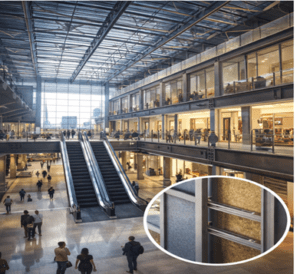
Prefabrication has become a cornerstone of fast-track construction, especially for steel retail hubs in Dubai.
Prefabrication refers to the process of manufacturing structural components in a controlled factory environment before transporting them to the construction site. This approach offers several advantages, including superior quality control, reduced labor requirements on-site, and faster assembly times.
In Dubai’s retail projects, where schedules are often aggressive due to commercial and seasonal demands, prefabrication allows developers to accelerate the construction process without compromising safety or structural integrity.
Steel’s inherent modularity makes it particularly suitable for prefabrication. Beams, columns, trusses, and even complex roof assemblies can be precisely fabricated in the factory, minimizing errors that could occur during on-site cutting or welding.
Precision Engineering in the Factory
A key benefit of prefabrication is the precision achieved in a factory-controlled environment. In Dubai retail hubs, prefabricated steel components are manufactured using state-of-the-art CNC machines, laser cutters, and automated welding systems.
This ensures that every element meets exact specifications, with tight tolerances that are difficult to achieve on-site.
Precision engineering reduces the likelihood of misalignment, structural stress, or rework during installation. For fast-track projects, this is critical: fewer errors translate directly into shorter construction schedules and lower costs.
Additionally, precise fabrication allows for more complex architectural designs, such as intricate atrium roofs, cantilevered extensions, and multi-level mezzanines, without compromising the speed or accuracy of assembly.
Modular Construction for Speed and Flexibility
Modular construction extends the concept of prefabrication by assembling large structural modules off-site, which can then be delivered and installed as complete units. In steel retail hubs, modules can include entire roof trusses, façade sections, or mezzanine floors.
Modular assembly offers significant time savings because multiple modules can be fabricated simultaneously while site preparation occurs in parallel. This overlapping of tasks, often referred to as “fast-track sequencing,” reduces the total construction timeline substantially.
Moreover, modularity provides flexibility for future expansion or alterations. Retail developers in Dubai benefit from this approach by having adaptable structures that can accommodate tenant-specific layouts or seasonal adjustments, all without major structural modifications.
Transportation and Logistics Considerations
The successful implementation of prefabrication and modular assembly depends heavily on transportation and logistics planning.
Steel components must be designed not only for structural performance but also for safe and efficient transport from the fabrication facility to the site. This requires careful attention to dimensions, weight, and handling requirements.
In Dubai, the compact urban sites of many retail hubs present logistical challenges, including limited crane access and narrow roads.
Prefabricated steel elements are often engineered in modular sizes that optimize transport efficiency while minimizing on-site handling difficulties.
Advanced planning ensures that delivery schedules align with installation sequences, reducing delays and site congestion, which are critical for fast-track projects.
Rapid On-Site Assembly Techniques
Once prefabricated steel components arrive at the construction site, rapid assembly techniques come into play.
Pre-engineered bolted connections, self-aligning plates, and modular joint systems allow steel modules to be installed with minimal adjustments.
Tower cranes, mobile cranes, and specialized rigging equipment are used to position large trusses, columns, and roof sections quickly and safely. On-site assembly crews work with precision templates and alignment guides, often completing tasks that would take weeks in traditional construction in just days.
This approach not only accelerates the construction timeline but also enhances worker safety by reducing high-risk manual operations, such as cutting, welding, or lifting heavy components on-site.
Integration with Mechanical and Electrical Systems
Prefabrication and modular assembly also facilitate the integration of mechanical, electrical, and plumbing (MEP) systems. In modern Dubai retail hubs, service elements such as HVAC ducts, electrical conduits, sprinkler systems, and plumbing lines are often pre-installed or pre-embedded within prefabricated modules.
This integration reduces on-site coordination challenges and allows MEP work to progress concurrently with structural assembly.
For example, a preassembled steel module for a mezzanine floor can include embedded conduits for lighting, power outlets, and fire suppression, enabling immediate connection once installed.
The result is a streamlined workflow that reduces delays, minimizes site conflicts, and supports fast-track delivery schedules.
Quality Assurance and Testing
Factory prefabrication allows for rigorous quality assurance (QA) and testing before components reach the site. Each steel member undergoes inspection for dimensional accuracy, material strength, weld integrity, and surface finish.
Load testing and simulation can be conducted on complex trusses or roof modules to ensure performance under anticipated structural loads. By detecting potential issues early in the factory environment, developers avoid costly on-site rework or delays.
In Dubai’s commercial context, where retail hubs must open on time for major tenants or shopping seasons, this QA approach is invaluable. It ensures that prefabricated steel elements arrive at the site ready for rapid installation, with minimal risk of failure or delays.
Time and Cost Efficiency
The combination of prefabrication, modular assembly, and precise on-site installation leads to significant time and cost savings.
Fast-track construction relies on parallel workflows, and prefabricated steel modules enable multiple tasks to occur simultaneously. Site preparation, foundation work, and module installation can overlap, reducing the overall project schedule by weeks or even months.
Cost efficiency arises from reduced labor requirements, minimized material waste, fewer on-site adjustments, and lower risk of rework. In the highly competitive retail market of Dubai, these efficiencies provide developers with a strong return on investment, allowing faster tenant occupancy and revenue generation.
Sustainability Benefits
Prefabrication and modular steel assembly also contribute to sustainability goals. Controlled factory environments minimize material waste, optimize energy use, and reduce site disturbances.
Additionally, steel is highly recyclable, and prefabricated modules can be reused or repurposed in future projects.
For Dubai retail hubs aiming to achieve LEED, Estidama, or other green certifications, these sustainable practices enhance the environmental performance of the building while supporting fast-track delivery.
By combining speed, efficiency, and sustainability, prefabrication reinforces the strategic advantages of steel structures in modern commercial construction.
Case Studies in Dubai
Several high-profile Dubai retail projects have successfully leveraged prefabrication and modular steel assembly. These projects demonstrate that large spans, intricate façades, and multi-level interiors can be completed quickly and efficiently using off-site fabrication.
In practice, modules are manufactured in parallel with site groundwork, transported in sequence, and installed with precision cranes.
Retail developers benefit not only from reduced timelines but also from higher quality finishes, lower operational disruptions, and improved structural performance.
The success of these case studies underscores the transformative impact of prefabrication in fast-track steel retail construction.
7. Innovations in Steel Connections for Speed and Stability
The Role of Steel Connections in Fast-Track Construction
Steel connections are fundamental to the structural integrity of retail hubs and a major factor in determining construction speed. In fast-track projects, connection design is not just about safety; it also directly affects assembly time, alignment precision, and overall workflow efficiency.
Traditional welded connections, while strong, require significant on-site labor, specialized equipment, and quality checks that can slow the construction schedule.
In contrast, modern steel connection systems—such as bolted, pre-engineered, and modular joints—enable rapid installation, minimize the risk of errors, and provide reliable structural stability.
For Dubai’s retail hubs, where timelines are aggressive and architectural designs are often complex, innovations in connection technology allow steel structures to achieve both strength and speed.
Bolted Connections for Rapid Assembly
Bolted connections are among the most widely used innovations in fast-track steel construction. These connections allow structural members, including beams, columns, and trusses, to be securely joined without extensive on-site welding.
Bolted joints can be pre-drilled or pre-punched in the fabrication facility, ensuring precise alignment. On-site assembly then becomes a matter of positioning the components and tightening the bolts according to specifications.
This approach drastically reduces labor requirements, minimizes on-site welding risks, and allows construction crews to maintain consistent progress, even in adverse weather conditions.
In Dubai retail hubs, bolted connections are particularly useful for modular components, as they facilitate quick assembly and disassembly if design changes or expansions are required.
Pre-Engineered Connection Systems
Pre-engineered steel connection systems take efficiency one step further by standardizing joints for specific structural configurations. These systems are designed to fit predetermined members, often with self-aligning plates, integrated shear connectors, or pre-installed fasteners.
Pre-engineered connections eliminate the need for complex measurement adjustments on-site and reduce dependency on highly skilled labor for alignment.
In fast-track retail construction, this system ensures that each steel module can be installed immediately upon delivery, allowing site teams to maintain a continuous construction rhythm.
Dubai projects benefit from this technology by minimizing the risk of schedule overruns, especially in multi-story structures where cumulative delays in connection assembly can be costly.
Modular Connection Innovations
Modular connection innovations are particularly transformative in retail hub construction. These connections allow entire structural modules—such as roof trusses, mezzanine floors, or façade assemblies—to be joined seamlessly with adjacent modules.
Specialized mechanical interlocks, precision-fit brackets, and high-strength bolts enable structural elements to “click” together with minimal adjustment. Modular connections reduce installation time and enable rapid on-site verification of alignment, eliminating the need for lengthy corrective procedures.
For large Dubai retail hubs with expansive floor plates or cantilevered sections, modular connections not only speed up assembly but also provide predictable structural performance that aligns with engineering design specifications.
Hybrid Connections for Flexibility
Hybrid connections combine multiple technologies to optimize both speed and load-bearing capacity.
For example, a hybrid system may use bolted flanges for rapid assembly combined with welds at critical stress points for additional stability. In fast-track retail projects, hybrid connections allow engineers to balance the need for rapid construction with the requirements of complex architectural or load conditions.
Dubai retail hubs often feature large open spaces, suspended ceilings, or cantilevered roof sections where hybrid connections provide both efficiency and reliability. The flexibility of hybrid systems also enables the integration of future expansions or retrofits without extensive structural modification, supporting long-term adaptability in commercial buildings.
Impact on Structural Stability
Innovative connection systems do not compromise structural stability; in fact, they enhance it by ensuring predictable load transfer and minimizing installation errors. Precision-engineered connections distribute forces uniformly across beams, columns, and trusses, reducing the risk of localized stress or deformation.
For cantilevered sections, mezzanines, or roof overhangs, high-performance connections are critical to maintaining alignment and structural integrity under both static and dynamic loads.
In fast-track construction, the reliability of these connections allows engineers to confidently reduce on-site inspection times without sacrificing safety or compliance, streamlining both construction and regulatory approval processes in Dubai’s rigorous commercial environment.
Integration with Prefabricated Modules
The synergy between advanced steel connections and prefabricated modules is a cornerstone of fast-track retail construction. Pre-fabricated steel components often arrive at the site with connections partially or fully installed, ready for immediate integration with other modules.
Pre-engineered bolts, interlocking brackets, and alignment guides ensure that modules connect seamlessly, reducing on-site adjustments.
In Dubai retail hubs, this integration allows multiple construction activities foundation work, module installation, and MEP integration to occur simultaneously, maximizing efficiency and minimizing overall project duration.
Prefabrication combined with innovative connections transforms complex architectural visions into buildable, stable structures without compromising speed.
Safety and Quality Assurance
Innovative steel connections also improve safety during construction. Bolted and pre-engineered connections reduce the need for on-site welding, cutting, or heavy lifting under precarious conditions, minimizing the risk of accidents. Additionally, connection systems are often pre-tested in the factory for load capacity, torque, and alignment accuracy.
This quality assurance ensures that each joint meets engineering standards before it reaches the site. For fast-track retail hubs in Dubai, where construction timelines are tight, reliable connection systems mitigate delays caused by rework or safety incidents.
By providing both speed and structural certainty, these innovations support high-performance outcomes in complex commercial projects.
Time and Cost Efficiency
By reducing on-site labor, eliminating extensive welding, and enabling rapid module integration, modern steel connections directly contribute to time and cost efficiency.
Fast-track construction schedules benefit from the predictability of standardized connections, reducing delays caused by alignment errors or variable labor skill levels. Cost savings are realized through lower labor hours, reduced rework, and minimal downtime for inspections.
In Dubai’s retail hubs, these efficiencies translate into faster tenant occupancy, earlier revenue generation, and the ability to meet critical market deadlines without compromising structural safety or quality.
Adaptation to Future Design Needs
Modern steel connections are not just about immediate construction efficiency—they also enable future adaptability. High-strength bolted systems and modular connections make it easier to reconfigure interiors, expand floor plates, or adjust roof and façade elements.
In the dynamic retail environment of Dubai, where tenant requirements, consumer trends, and branding strategies can change rapidly, adaptable connection systems provide developers with long-term flexibility.
Future renovations or expansions can be achieved without major structural interventions, preserving the original fast-track construction advantages while supporting evolving commercial needs.
Case Studies in Dubai Retail Hubs
Several Dubai retail hubs have demonstrated the impact of innovative steel connections on fast-track construction.
Multi-level shopping complexes with large atriums, expansive floor plates, and cantilevered roof structures have leveraged bolted, modular, and hybrid connections to maintain rapid progress without compromising structural integrity. On these projects, connection innovations allowed simultaneous module installation, reduced crane dependency, and ensured precise alignment even under challenging site constraints.
These case studies highlight the practical benefits of engineered connection solutions in meeting tight schedules, achieving architectural complexity, and maintaining safety standards in Dubai’s competitive commercial construction market.
8. The Future of Fast-Track Steel Construction in Dubai Retail Hubs
Emerging Trends in Steel Construction
The landscape of retail construction in Dubai is evolving rapidly, driven by both market demand and technological innovation. Emerging trends in steel construction are redefining how fast-track projects are planned and executed. Among these trends, digital design integration, modular fabrication, and advanced connection systems are gaining prominence.
By combining Building Information Modeling (BIM) with real-time project management tools, developers can simulate construction sequences, anticipate challenges, and optimize logistics.
This proactive planning reduces delays and enhances efficiency. In Dubai, where retail hubs must open on strict deadlines to align with commercial seasons and investment cycles, these trends are pivotal for maintaining competitive advantage and delivering high-quality structures at accelerated speeds.
Digital Twin and BIM Integration
Digital twin technology and BIM are becoming essential tools in fast-track steel construction. BIM allows engineers and architects to create highly detailed 3D models of the entire retail hub, including structural steel elements, MEP systems, and architectural finishes.
Digital twins take this concept further by connecting the virtual model with real-time data from the construction site. Sensors and tracking devices monitor the progress of steel assembly, detect alignment issues, and even predict potential bottlenecks.
For Dubai retail hubs, integrating BIM and digital twins ensures that steel structures are assembled efficiently, with every connection, beam, and module accounted for in real time. This technology reduces errors, enhances coordination among multiple contractors, and shortens construction timelines while maintaining strict quality standards.
Prefabrication and Modular Steel Systems
Prefabrication continues to be a game-changer for fast-track construction in Dubai. Steel modules pre-engineered off-site arrive ready for immediate installation, reducing on-site fabrication and labor requirements.
Modular steel systems allow developers to standardize floor plates, façade sections, and roof assemblies, which not only speeds up construction but also ensures consistent quality. In large-scale retail hubs, where repetitive structural elements are common, modular steel systems simplify logistics, optimize crane usage, and facilitate parallel construction activities.
The combination of prefabrication and modularity enables multiple trades to work simultaneously, thereby compressing the construction schedule and achieving faster project delivery without compromising safety or structural integrity.
Sustainable Steel Practices
Sustainability is an increasingly important consideration in Dubai’s commercial construction sector. Modern steel construction supports environmentally responsible practices through material efficiency, recyclability, and reduced construction waste.
Advanced steel fabrication techniques allow precise cutting and pre-assembly, minimizing leftover scrap and reducing the carbon footprint of construction activities. Moreover, steel structures offer long-term durability, enabling future modifications and expansions without significant material replacement.
For fast-track retail hubs, sustainability practices not only contribute to environmental goals but also appeal to tenants and investors who prioritize eco-friendly developments. This alignment with global sustainability trends positions Dubai’s retail hubs as forward-looking, responsible commercial centers.
Innovative Structural Solutions
Future retail hub projects are likely to adopt increasingly innovative structural solutions. Lightweight steel framing, hybrid steel-concrete composites, and cantilevered roof systems allow architects to achieve bold design visions while maintaining rapid construction schedules.
These solutions enable open floor plans, large atriums, and expansive retail spaces that enhance customer experience without compromising speed or stability.
Engineers are experimenting with new connection technologies, adjustable modular joints, and high-strength alloys that can handle dynamic loads while reducing assembly time.
Dubai’s fast-paced commercial environment demands structural systems that are both robust and adaptable, and these innovations are key to meeting such requirements while maintaining accelerated project timelines.
Automation and Robotics in Steel Assembly
Automation and robotics are gradually transforming the way steel components are handled and assembled. Robotic welding, automated lifting systems, and drones for inspection are improving accuracy, safety, and speed.
By automating repetitive tasks, construction teams can focus on complex assemblies and quality control, reducing human error and enhancing overall productivity.
In Dubai retail hubs, where project schedules are compressed and labor costs are significant, robotics can accelerate the erection of steel structures, streamline logistics, and improve site safety.
The integration of automated systems also allows for precise installation of modular components, ensuring that the pre-engineered connection systems function as intended without delays caused by misalignment or manual error.
Future-Proofing Retail Hubs
Fast-track construction is not just about speed; it’s about creating resilient, future-proof structures. Steel construction allows for flexibility in interior layouts, expansions, and upgrades.
Future-proofing involves designing structures that can accommodate changes in tenant requirements, emerging retail trends, and technological integrations without major structural modifications.
In Dubai, where retail hubs compete to offer unique experiences, flexible steel structures enable developers to adapt their properties quickly, minimizing downtime and ensuring continuous revenue generation.
This long-term adaptability is a key advantage of steel construction in fast-track projects, balancing the immediate benefits of speed with enduring functionality and profitability.
Economic and Market Implications
The adoption of steel-based fast-track construction has significant economic implications for Dubai’s retail sector. By reducing construction timelines, developers can open new retail hubs sooner, generating revenue faster and responding effectively to market demand.
Lower labor costs, reduced rework, and efficient project sequencing contribute to overall cost savings, enhancing project feasibility. Investors and retailers benefit from predictable schedules, high-quality construction, and the ability to plan marketing and operations in alignment with building completion.
Steel’s adaptability also reduces the financial risk associated with future expansions or modifications, making it an economically attractive solution for Dubai’s competitive retail market.
Challenges and Solutions
While steel construction offers many advantages, it is not without challenges. Coordinating deliveries, managing crane operations, and ensuring precise alignment of prefabricated modules can be complex in fast-track projects. Additionally, extreme weather conditions, high humidity, or hot temperatures in Dubai can impact steel fabrication and on-site assembly.
However, these challenges can be mitigated through careful planning, advanced scheduling software, and the use of protective coatings or pre-treated steel. Collaboration between engineers, contractors, and project managers is crucial to anticipate potential issues and maintain construction pace.
By addressing these challenges proactively, developers can leverage steel construction to achieve both speed and structural excellence.
The Role of Skilled Workforce
Even with automation, modular systems, and pre-engineered connections, the role of a skilled workforce remains vital.
Engineers, supervisors, and assembly crews ensure that all modules, bolts, and connections meet design specifications. Training programs and safety protocols are essential for fast-track steel projects, where the pace of construction can amplify risks if standards are not strictly followed.
In Dubai retail hubs, where multiple contractors may work simultaneously, a coordinated and competent workforce ensures that speed does not compromise quality.
Skilled teams also facilitate real-time problem-solving, allowing minor deviations or unforeseen site conditions to be managed efficiently without causing project delays.
Technological Synergy
The future of fast-track steel construction lies in technological synergy, where BIM, prefabrication, modular connections, robotics, and digital monitoring work together. This integration enables continuous optimization of design, fabrication, and assembly processes.
For Dubai retail hubs, technological synergy allows simultaneous work on multiple building components, reducing idle time and improving resource utilization. Monitoring systems can track the progress of steel erection, verify connection integrity, and provide data for future maintenance.
The cumulative effect is a streamlined construction process that maximizes efficiency, minimizes errors, and delivers high-quality retail environments on accelerated schedules.